
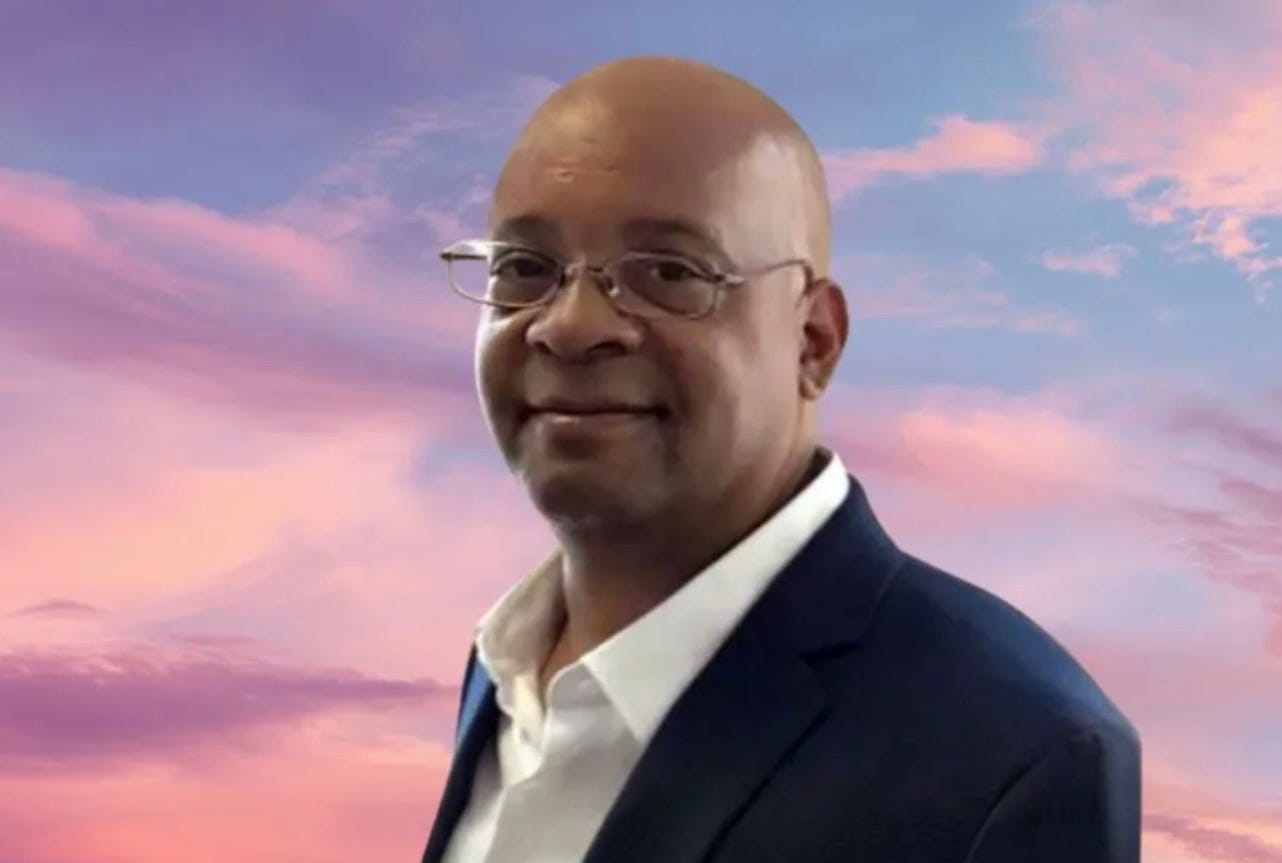
The force behind The Source was James Bernard
An unsung editor’s tragic demise reminds us of what might have been

It’s a creeping fact that too many of my colleagues and friends from the brief-yet-critical heyday of rap mag journalism are dying, and they are dropping dead far too young.
This sense of loss piling up might have begun last May, with the passing of Sacha Jenkins, a legit hip hop giant. Jenkins, 54, was a visionary editor at some the rap mag era’s most influential titles, as well as an excellent film documentarian. On the side, my man played guitar in and wrote for The 1865 and The White Mandingos.
In December, all of us old-timers lamented the death of Shani Saxon, an editorial mainstay at some of the period’s best “urban” titles.

And if we’re going to be totally real, I still feel an ache upon recalling the death of Greg “Iron Man” Tate, more than four years ago. Among my most formative Central Valley college revelations, discovering the Village Voice culture critic was pretty high up on the list.
Last week’s news that James Bernard, co-founder, top editor, and conscience of The Source magazine, died by suicide at 58 was fast buried in a sea of consequential news developments. Yet our crazy world hasn’t made me shake thoughts of James and the good that he accomplished in his too-brief time.
In fact, as the landscape of 2026 America cannot help but remind me of what might have been, were our best minds not dying so young.
Before 1988, Greg Tate could drop insightful, resonant prose in a venue like the Voice or Spin. A solid piece of rock criticism might get an important record right in public, a few times each year. Functionally though? There was no hip hop journalism before The Source editorial Mind Squad.
Here is why James Bernard was necessary:
In the mid-80s, mainstream publications were beginning their long path toward treating hip hop and its elements like a crime story and not as an art form. After The Source’s successful launch, the politics of this emerging culture would be infinitely harder to separate from its musical aesthetics. We now had a standard.
It cannot be underlined hard enough, the undervaluing of hip hop music in those pre-internet days. Mainstream music editors and Black radio programmers were years away from considering our greatest records even legitimate.
The taste chasm was enormous.
You can get a glimpse of revolutionary young James in this video tour of The Source’s Manhattan offices, recorded by Bay Area media mainstay Billy Jam.
That Bernard went to law school with Barry Obama had slipped my mind. I did remember that James was one of four Harvard students who started what would come to be known as The Hip Hop Bible, out of an office in Somerville, Massachusetts.
Five Mics. The Source album reviews ratings system stands as 2026 shorthand for a classic rap album. Bernard came up with that iconography. His byline was on the most cogent and progressive opinion writing. And I swear that an accomplished enough reader could triangulate and detect Bernard’s hand in The Source’s editorial integrity and self-respect.
It was almost as though the magazine legit sought to nurture the singularly complex culture it was chronicling.
So many successful storytellers got their first glossy bylines in that first iteration of The Source. Some went on to books and more prominent mag journalism. Probably a disproportionate number went into TV and film, because the print milieu then was so far from rap music.
The words “first iteration” should tip that the Bernard Source era didn’t stretch on endlessly.
REMEMBER when I used to refer to WCS as journalistic busking? Welp, this week a couple of subscribers proved that metaphor less apt than previously thought. Unless it turns out that busking audiences sometimes generate work for the performer and gift them fantastic vacationland housing, that comparison is so off.
We’re doing something else here.
The creativity of these two acts floors me. While I love that y’all tend to fete me with cannabis when we meet up, I am fairly set for weed in this moment and could actually use the comfort and cash that the aforementioned duo threw into my figurative hat. Especially as I’ll be working in expensive-ass Los Angeles next week, now would be a dope time to become a paid subscriber. Some dedicated readers express their appreciation for my busker-like offerings via Venmo, and that’s just fuckin’ dope, too.
To be clear, it’s still perfectly awesome to greet me with cannabis.
Here is the short version of how it all went down. The hardcore among you might want to take on a sloppier, more detailed take that dwells just beyond the paywall, under the headline, “Bernard’s defining moment.”
For now, just know that the fall of 1994 issue below—which announces a phenomenal Redman album—contains the final Mind Squad editorial. (Chuck D and I got fun mentions, too.)
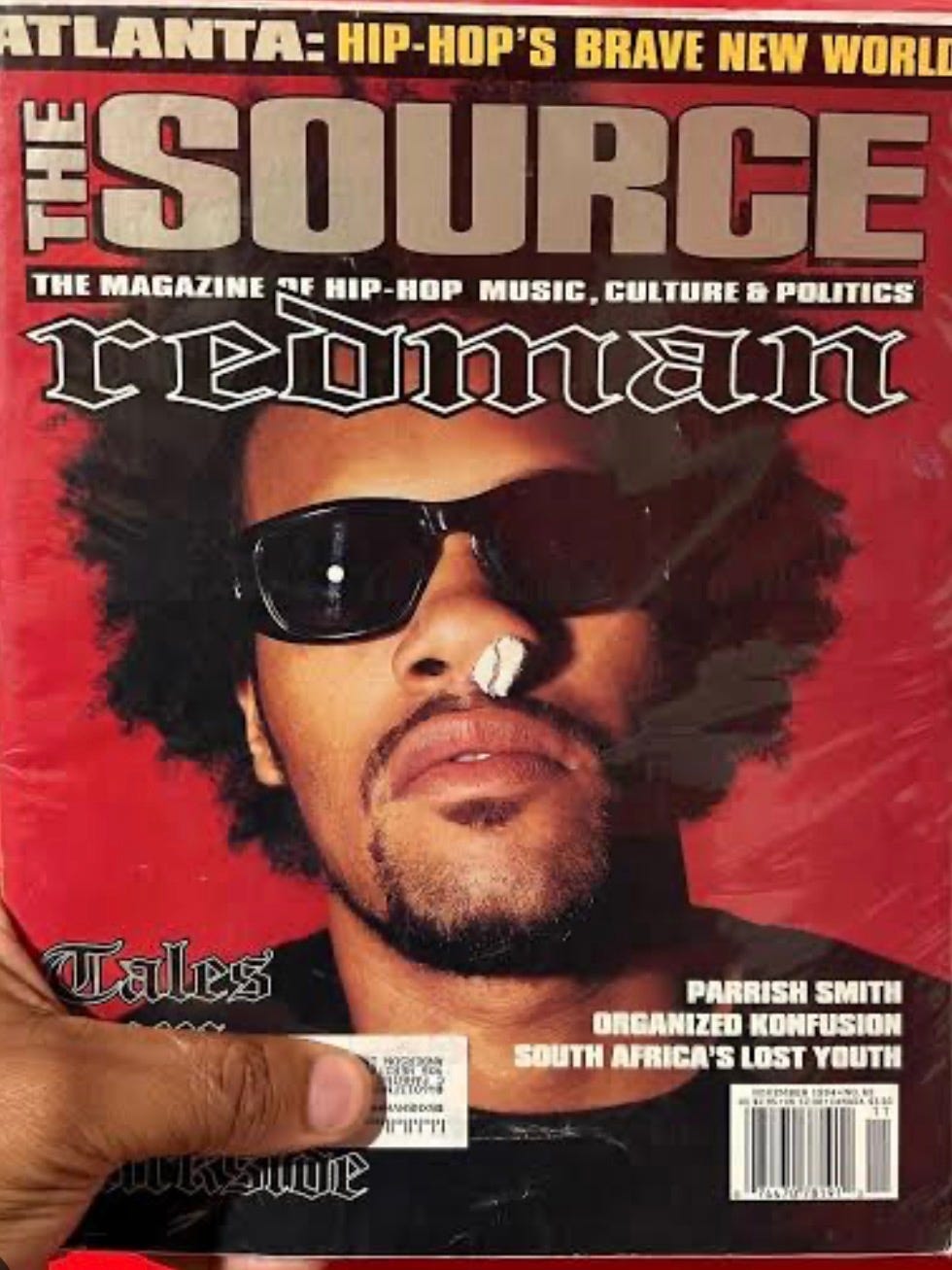
Before the issue hit mailboxes and newsstands, Bernard and his staff had walked out. A faction of the mag’s money folk had corrupted its editorial credibility.
It is a long story, but ultimately familiar.
After that principled walkout, The Source went on to make its investors many, many millions. The music mag chronicled 1,000 important artists, alongside 2,000 acts that positively sucked. Maybe such compromise was inevitable, but The Source had seemed all-the-way exceptional.
Bernard went on to co-found XXL, another publication that turned out pretty well. The what-might-have-been air of this remembrance concerns the hip hop journalism form.
Sure, I wonder how the rap world might have fared differently if James had been able to sit down with Tupac and put into the wild youngster’s head something other than what LA Bloods and label execs were offering. Mostly though I have been fantasizing about what American journalism might look like if the seeds Bernard sowed had been able to mature.
A spate of hip hop journalists on both coasts had gotten their asses kicked by artists. Editors at The Source offices had taken to packing heat, the threat from inside of their building had gotten so real. Brooklyn MC Jeru the Damaja and I had tussled on the phone. Then Chuck and I had a useful and somewhat contentious conversation, all over the rights of journalists covering the scene.
Were we to be considered part of the culture or not?
